A Plant App That Says How Sure It Is
Tulpi names a plant from a photo on the iPhone itself, says how sure it is, and then helps you keep your own plants alive. I built it in 2026 from research to App Review: the on-device model, the app, the server and the website. The website came first in the public order, so it comes first here.
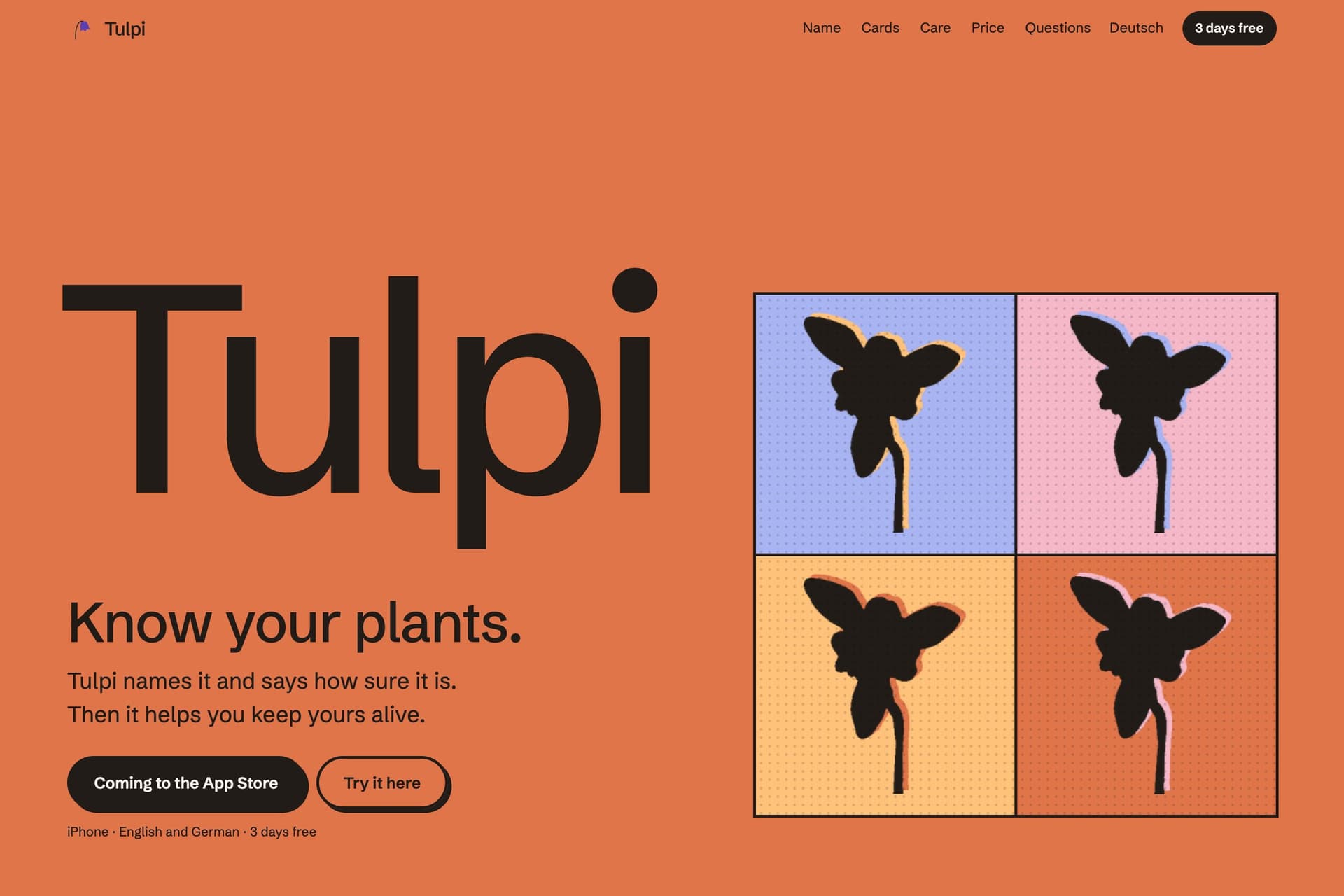
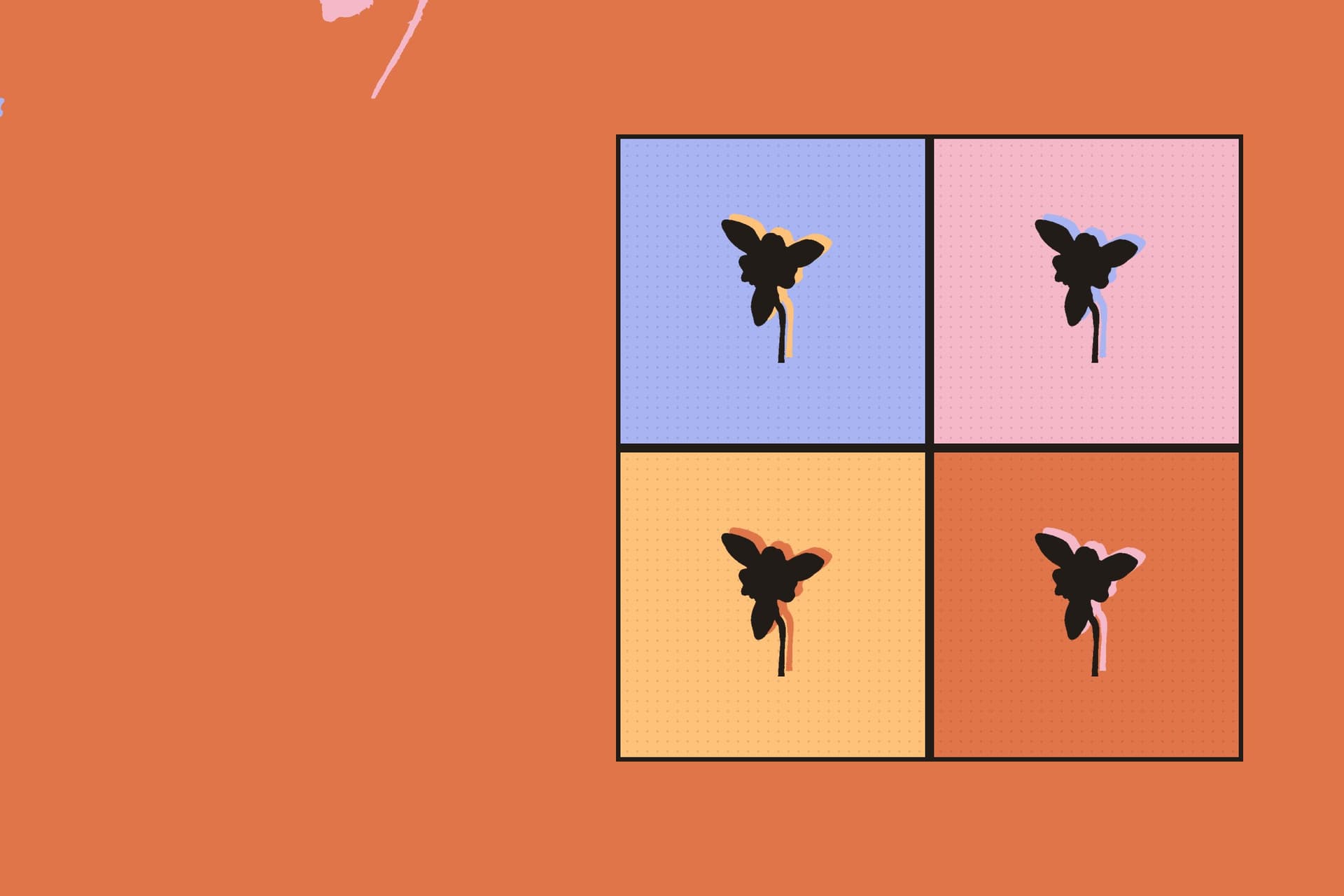
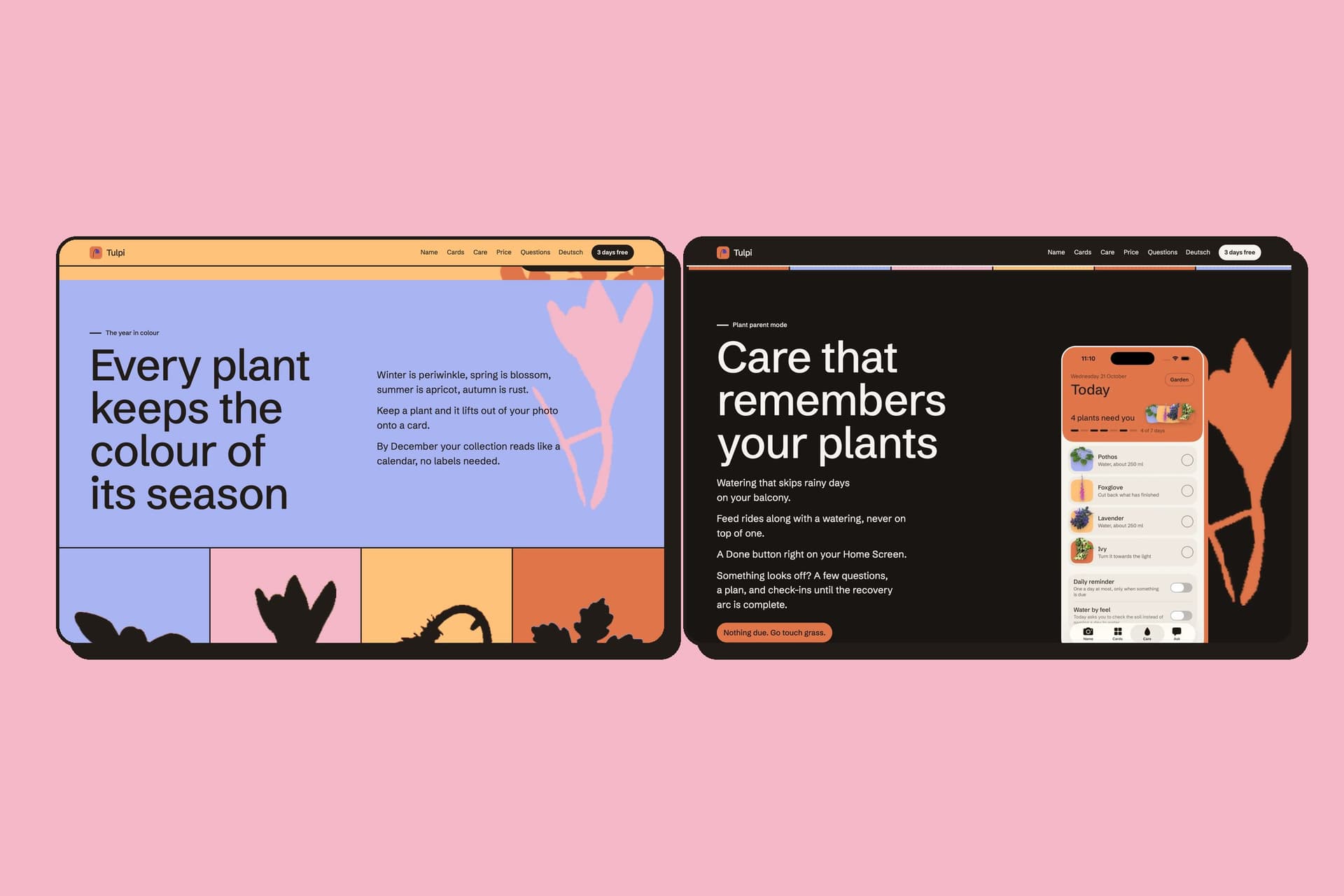
The site is a visit through rooms, each in one of the app's four season colours: periwinkle for winter, blossom for spring, apricot for summer, rust for autumn. One snowdrop printed four times opens it, the way a screenprint repeats a motif. While you scroll, the opening stays pinned and the prints fly apart, giant plant cut-outs drift at their own depth behind every room, and two bands of season cards slide against each other. All of it is one scroll-driven motion system, and all of it is off under reduced motion.
In the second room you can try the idea: a plant silhouette, three names, and the app's own honest word when you get it right. The page also carries the three numbers that matter and nothing else: how often the first answer is right, how often it says Sure, and how often a Sure holds. Built in plain HTML, CSS and JavaScript, one file per language, nothing loaded from anyone else's server.
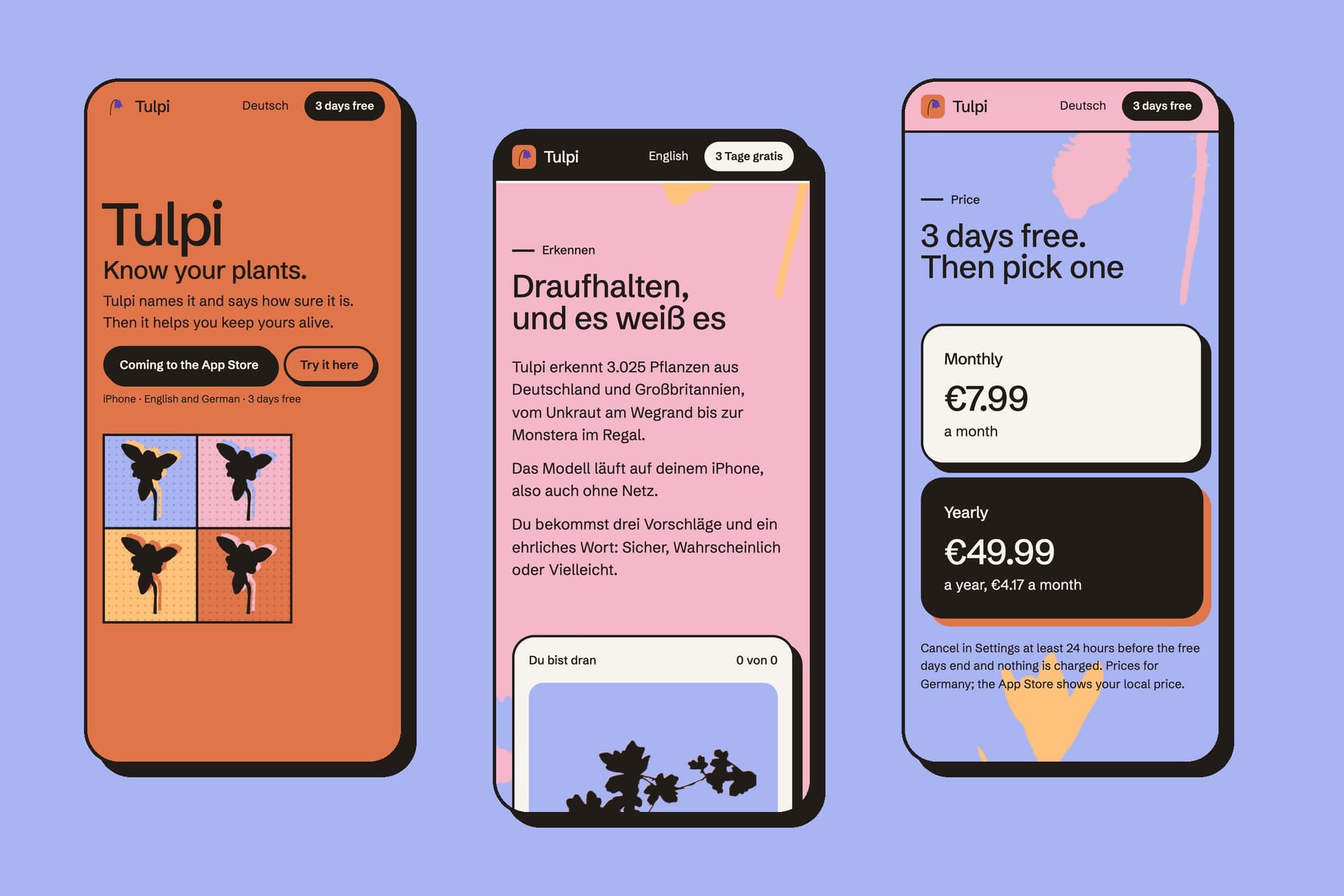
Search engines and answer engines get the whole set from day one: structured data for the app, its two prices and the questions, a sitemap, share pictures in both languages, a file that tells AI assistants the facts to quote, and a robots file that lets every search and AI crawler in. German lives under /de/, the imprint and privacy pages are German law, and the site runs on its own server next to the app's API.
“Tulpi names it and says how sure it is. Then it helps you keep yours alive.”
The app. An image model runs on the phone and names 3,025 plants of Germany and the UK, wild, in the garden and on the windowsill, with no connection. Every answer is three candidates and one word: Sure, Probably or Maybe. Below Sure, the app asks for one more photo of the part it lacks, a leaf or the flower, and fuses the two. Keeping a plant lifts it out of the photo onto a card in the colour of its season, so a year of plants reads like a calendar.
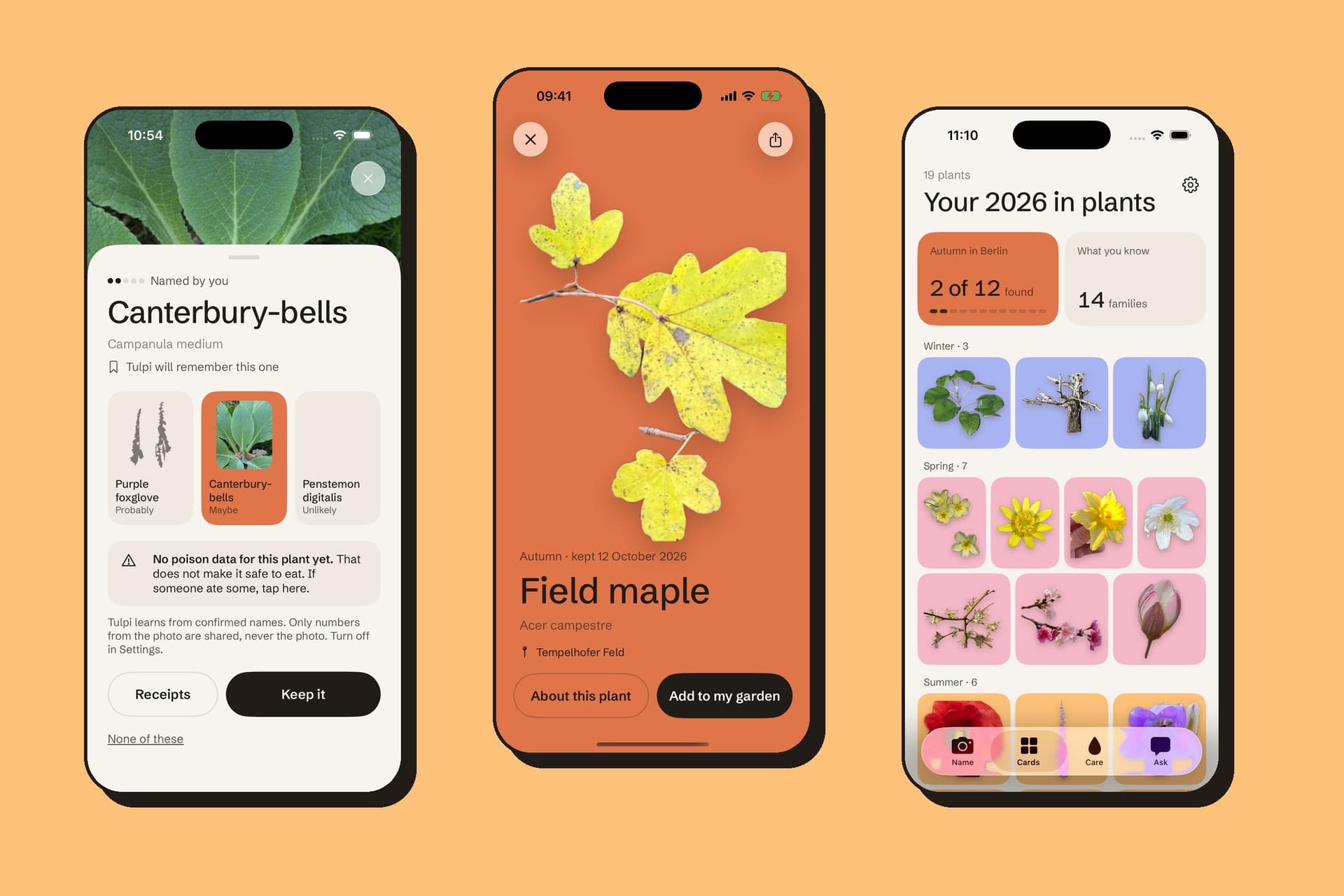
3,025
plants named on the phone, offline
94.3%
first answers right, 920 test photos
98.4%
of the answers it calls Sure hold
3
free days, then 7.99 € a month
challenge
Twenty plant apps claim instant identification and care plans, four claim an accuracy number, none say how sure an answer is. People pay to keep plants alive and cancel over billing and wrong names. The brief: a plant app a person can trust, and a website that shows it before the App Store does.
approach
An image model on the phone, measured on 920 research-grade photos before a line of interface was drawn. Three candidates and one honest word per answer. Cards in the colour of the season, so the collection is the year. A website that mirrors the app: the same four colours, the same ink silhouettes, a quiz you can play, and structured data, llms.txt and a sitemap from the first deploy.
impact
First answer right 94.3 % of the time; the answers it calls Sure hold 98.4 % of the time. The app went from research to App Review in one week with 160 tests and a live server; the site went live at www.tulpi.app the same day. No account, photos stay on the phone, and the poison-centre screen is open to everyone.
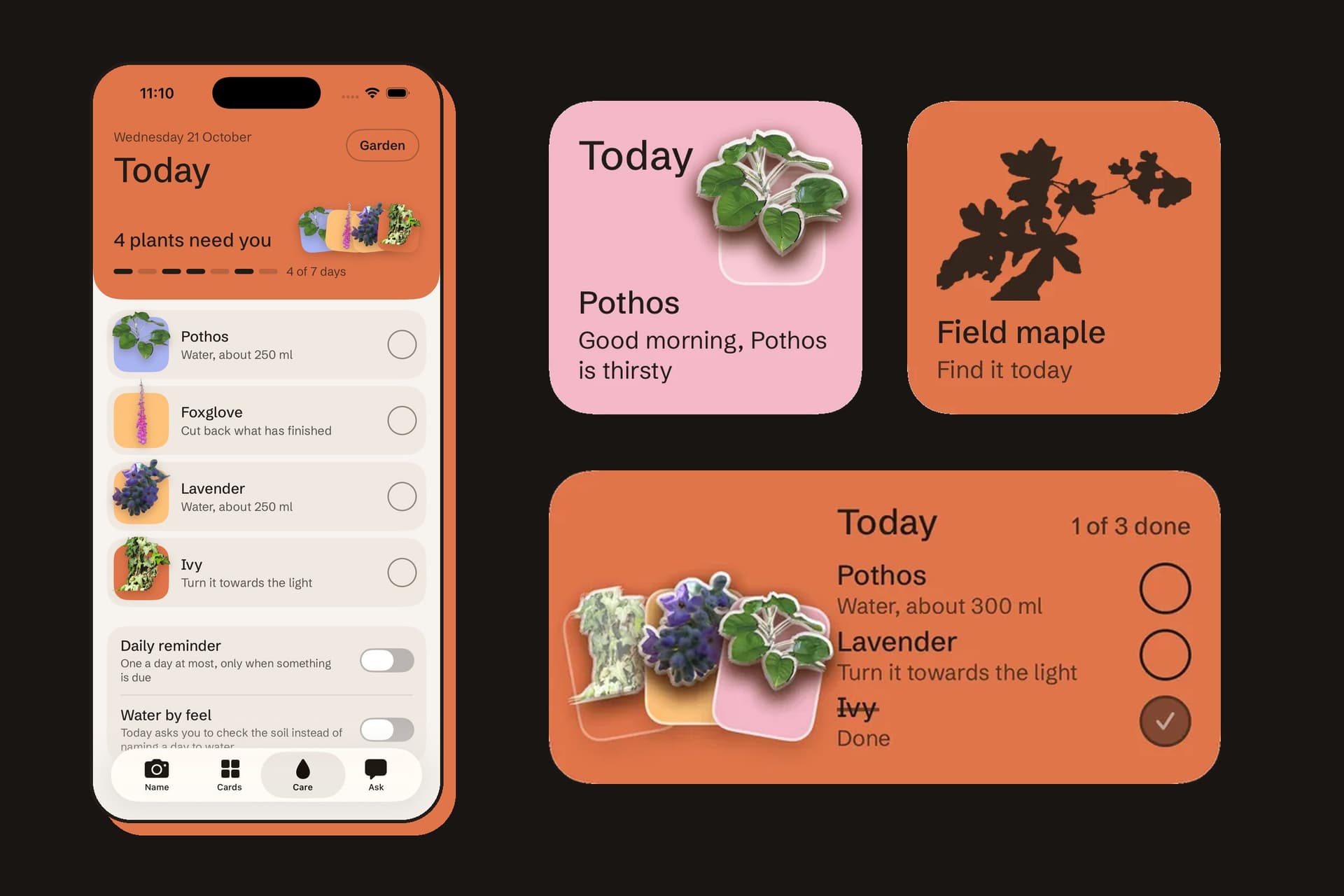
Care that remembers each plant: watering that skips rainy days on a balcony, feeding only together with a watering, one Done button on the Home Screen, and when something looks off, a few questions, a plan and check-ins until the plant comes back. Widgets for the next drink, the day's plants and one plant to find in season; a Lock Screen gauge; a walk as a Live Activity.
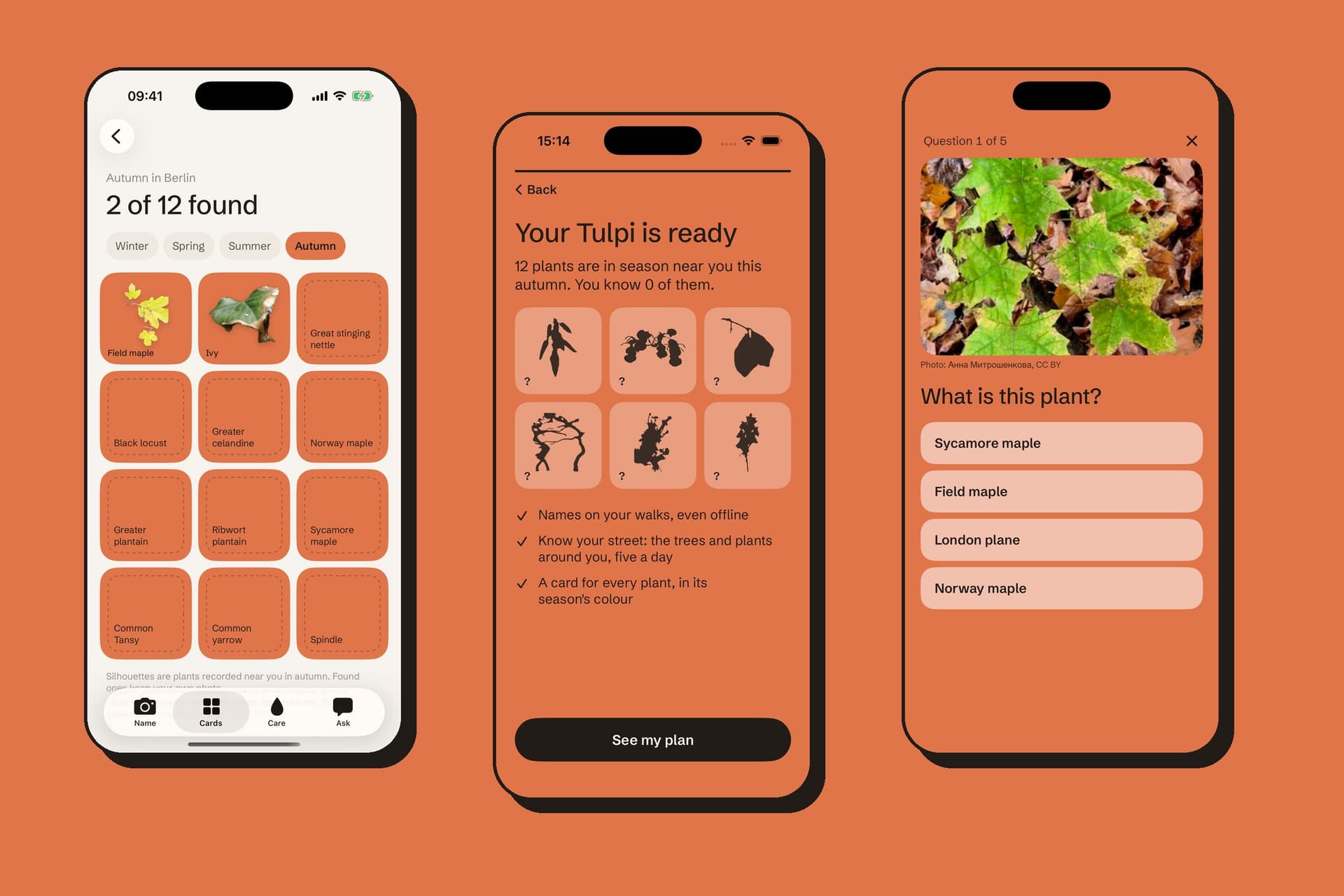
The app learns. A plant you correct is remembered on your phone as a fingerprint of the photo, and a name outside the library becomes a candidate once you have taught it. With Help Tulpi learn, only numbers computed from the photo, the confirmed name and the country are shared, never the photo; the server averages them into one fingerprint per species once three different phones agree. Season sets show twelve plants in season near you as silhouettes until you find them, and a daily round of five questions trains your eye on the plants of your own street.
What I did: market and review research across 6,943 App Store reviews, the on-device model and its measurement, the SwiftUI app with widgets and Live Activity, the Node server with Claude for the explanations and the sick-plant help, the hard paywall with a three-day trial, the name, the icon, the copy in English and German, and the website. Everything was tested on the way: 160 app tests, 99 server tests, and a photo set of 920 research-grade pictures.